
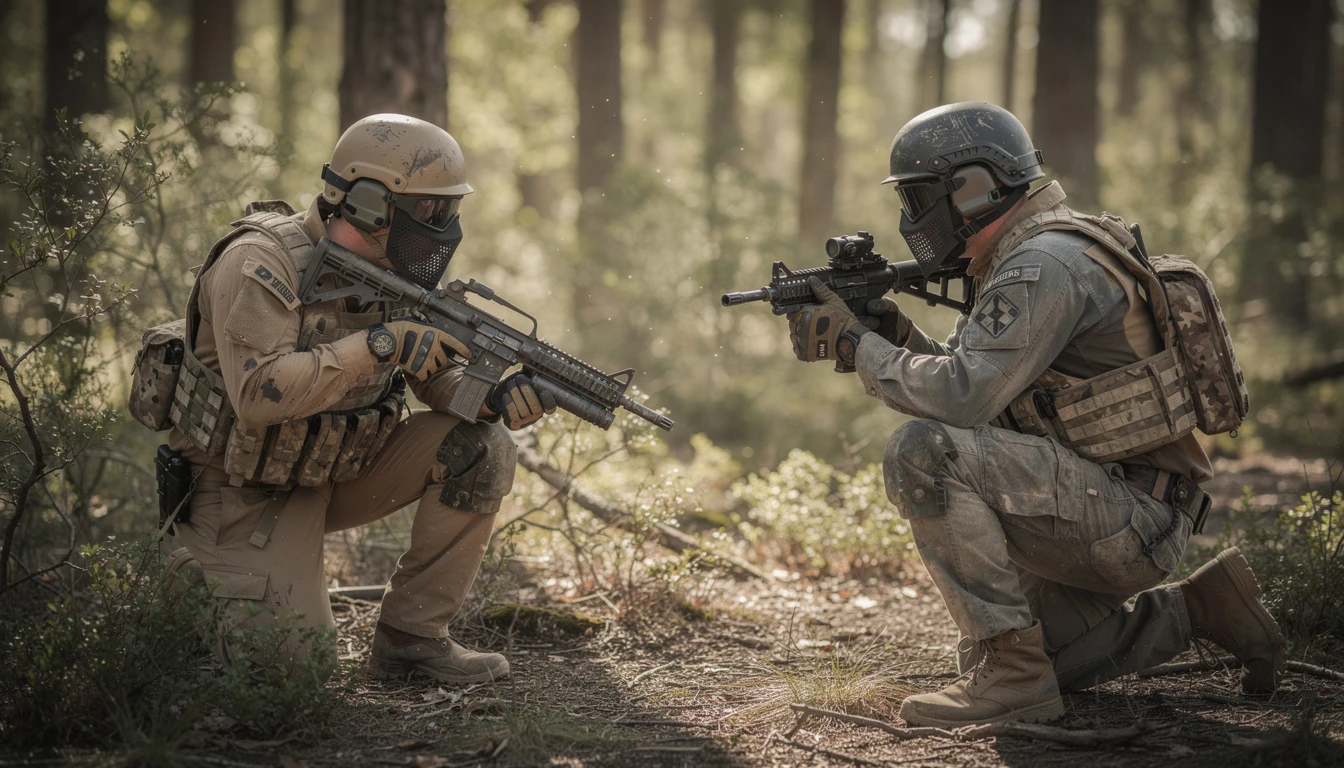
Airsoft often ignites debates when the word ‘sport’ enters the conversation. Some consider it pure entertainment, while others approach every match as if it were a true team sport. Setting aside personal opinions, examining what actually defines a sport reveals some fascinating elements about this competitive activity. Let us break down all these aspects to determine whether airsoft truly belongs alongside more established athletic pursuits.
How is sport defined?
A common question centers on how society officially recognizes something as a sport. The idea usually involves structured competition, clearly outlined rules, and genuine physical activity. Having skilled participants, employing strategy, and sometimes even introducing risk help distinguish sports from ordinary pastimes.
Teamwork also plays a crucial role in many definitions of sport. Whether in solo contests or group settings, sports tend to flourish when individuals coordinate and work together toward shared goals. Additionally, there should be measurable performance—clear methods for determining winners and losers, such as points, times, or other objective criteria.
What makes airsoft more than just recreational activity?
Airsoft goes well beyond typical casual games. Inspired by military simulation sport concepts, it immerses participants in scenarios filled with mock combat and tactical challenges that demand focus and energy.
The experience appeals to a wide range of ages, providing highly realistic replica firearms that make the action feel authentic. Armed only with plastic pellets, teams engage in everything from rapid skirmishes to elaborate missions staged in forests, fields, or urban environments.
Physical demands and skill requirements
Anyone who assumes airsoft consists of just leisurely strolling is quickly proven wrong after a real match. Navigating under fire requires ducking, sprinting, crawling, and diving—activities that deliver a powerful cardiovascular workout.
Strategy forms the foundation of play. Every shooting game demands tactical decisions: knowing when to push forward, how to retreat, who provides cover, and which objectives take priority. Physical exertion merges with mental agility, ensuring both mind and body remain fully engaged.
Teamwork and competitive spirit in airsoft
It is impossible to overlook the importance of teamwork during any military simulation sport session. Team-based gameplay lies at the heart of airsoft, making cooperation, trust, and clear communication essential for success.
Experienced players recognize that individual talent alone never guarantees victory if the rest of the squad falters. Much like in traditional team sports, squads must synchronize their actions, share vital information, and support each other during high-pressure moments.
Competitive leagues and tournaments
In recent years, organized competitions have placed airsoft firmly within the realm of serious sporting contests. Many regions now host large-scale events where rivalries intensify, participants chase trophies, and organizers implement strict regulations similar to those found in mainstream sports.
Some associations standardize scoring systems, time controls, and safety protocols to legitimize matches further. Once registered, teams and players compete in an environment offering not just entertainment but recognition worthy of champions.
Tactics and training routines
Dedicated preparation transforms casual hobbyists into formidable competitors. Numerous enthusiast groups adopt training regimens comparable to those seen in other tactical sports, conducting regular drills and honing accuracy under pressure.
These routines encompass strategies ranging from close-quarters maneuvers to stealth tactics in open terrain, all aimed at perfecting responses to stressful situations. This commitment raises the experience from casual fun to genuine athletic development.
The role of equipment and realism
Nothing enhances immersion faster than using realistic replica weapons and wearing authentic gear. Equipment holds a significant role, setting airsoft apart from standard shooting games by creating convincing scenarios with tangible stakes.
There is almost limitless potential for personalization—from camouflage uniforms to advanced optics. Together, these elements contribute to a level of military simulation that many claim is unmatched among recreational activities.
- Protective gear: face masks, helmets, gloves
- Replica rifles, pistols, shotguns (spring-powered, gas, or electric)
- Tactical vests, belts, and pouches
- Scenario-specific props (flags, shields, barricades)
- Communication devices: radios, headsets
Why does airsoft attract such diverse participants?
For some enthusiasts, the main attraction is the adrenaline-pumping action. Others are drawn to its strategic complexity and the opportunities it provides for social interaction. Those seeking alternatives to screens and routine fitness routines find motivation in on-field challenges that require quick reflexes and split-second decision-making.
As with any skirmish sport, diversity is evident not only in player backgrounds but also in playing styles and preferred formats. From intense military simulation weekends to family-friendly entertainment gatherings, airsoft offers experiences tailored to nearly every type of participant.
Frequently asked questions about airsoft’s place in sport
Does airsoft require athletic ability and fitness?
While certain roles in airsoft may involve less movement, possessing physical fitness remains a significant advantage. Successful players navigate obstacles, sprint between covers, and maintain focus throughout extended matches. In competitive or scenario-driven sessions, stamina, strength, and agility elevate performance far above casual levels.
- Movement includes running, jumping, and crawling
- Quick reactions limit exposure and increase survival chances
- Endurance prevents mistakes late in the match
How do airsoft rules compare to traditional team sports?
Airsoft matches operate within structured frameworks much like soccer, basketball, or paintball. Teams adhere to defined boundaries, time limits, scoring systems, and safety guidelines. Leaders assign tactical objectives and manage lineups, closely mirroring the organization found in many recognized team sports.
| Aspect | Airsoft | Traditional team sports |
|---|---|---|
| Teams | 2 or more | 2 |
| Scoring | Objectives met/hits made | Goals, points |
| Duration | Limited rounds/missions | Set halves/quarters |
| Strategy | Tactics, stealth, role allocation | Formations, plays |
Is airsoft dangerous compared to other physical activities?
Compared to contact sports or extreme outdoor pursuits, airsoft does present risks, but these are minimized through strict safety protocols and mandatory protective gear. Eye protection is especially critical, preventing injuries from fast-moving pellets. Adhering to instructions and choosing proper clothing substantially lowers the risk of harm.
- Required face and eye protection lower injury rates
- Safety marshals supervise most established venues
- No real projectiles or live ammunition involved
Can airsoft be considered both entertainment and competitive sport?
Many view airsoft primarily as a source of enjoyment outside formal competition, but the presence of organized events, leagues, and ranking systems means it fits the definition of a competitive sport for thousands of participants. Each can tailor their experience, enjoying airsoft as relaxed recreation, an intense tactical sport, or anything in between, depending on preference and dedication.
- Casual games focus on enjoyment and learning
- Leagues reward consistency and strategic mastery
- Events adapt rules for different audiences