
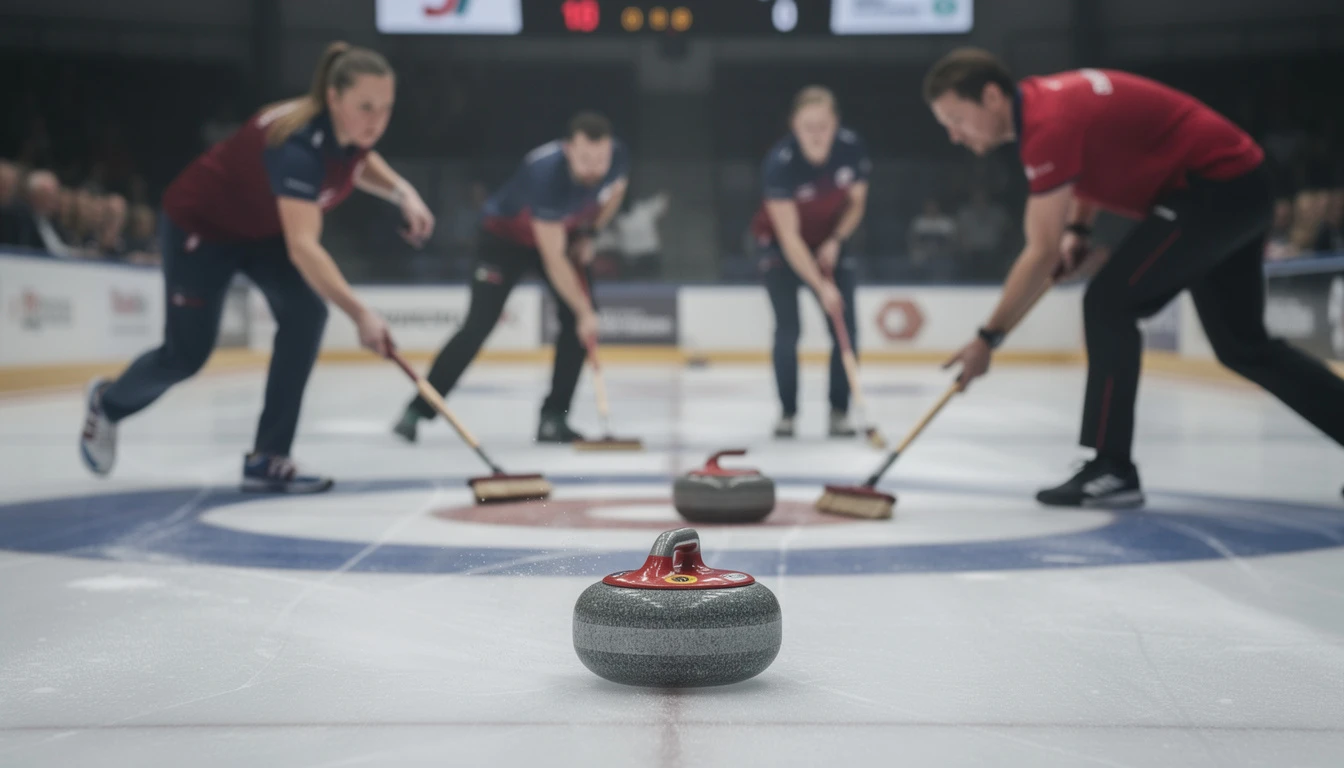
Curling always manages to catch the eye with its unique gameplay and cleverly devised strategies. As a sport played on ice, it stands apart thanks to its blend of precision, teamwork, and those quirky rituals—like sweeping the ice and sliding heavy granite stones down a long rink. For many newcomers, learning what makes curling so special can spark a whole new appreciation for winter sports and sometimes even kindle an interest in gliding those iconic rocks toward the target.
The basics: rules and essentials of curling
At its heart, curling is a team contest where two teams compete by sliding granite stones—also called rocks—across a sheet of ice toward a painted target known as the house. The primary goal is to score points by getting more stones closer to the center of that target than the opposing team. Matches are split into rounds called ends, which resemble innings in baseball, allowing every player to showcase their skills throughout the game.
The process is much more strategic than it first appears. Sweeping the ice ahead of a moving stone plays a crucial role, as it reduces friction and changes both speed and direction. Strategy goes far beyond simply sliding rocks on ice; it involves reading angles, predicting how the stones will curl, and working together seamlessly. Watching expert players aim so precisely for those concentric circles highlights why this olympic sport has won fans around the world.
Team structure and roles explained
Curling teams are made up of four members: the lead, second, vice-skip (or third), and the skip. Every player takes on specific responsibilities during each end, from throwing the granite stones to calling tactical shots or deciding when to start sweeping the ice. Clear communication between teammates is essential, especially when determining how hard to sweep or which path best fits the team’s strategy.
The spirit of curling is rooted in collaboration just as much as competition. Cohesion helps teams stay calm under pressure and make smart decisions—sometimes opting for a gentle tap or blocking an opponent’s route instead of always aiming squarely for the house’s center.
The role of sweeping and its effects
One of curling’s most recognizable features is undoubtedly sweeping the ice. Players use specialized brooms to briskly brush the ice right in front of a moving stone, adjusting its path or extending its glide. A well-timed round of sweeping can add crucial inches—or even feet—making all the difference in tight contests near the target.
This element often puzzles first-time viewers but quickly emerges as a skill demanding both timing and finesse. Deciding exactly when to sweep and for how long determines whether a stone lands at the perfect spot within the concentric circles. This adds excitement, tension, and plenty of dramatic twists throughout each match.
The origins and development: history of curling
The history of curling dates back to 16th-century Scotland, where villagers would slide simple river stones over frozen ponds. Over centuries, the game evolved, eventually achieving recognition as an olympic sport in 1998 after several appearances as a demonstration event. Today, the tradition thrives not only in Scotland but also across Canada, Scandinavia, Switzerland, and many other countries.
Curling’s heritage lives on through customs like shaking hands before and after matches—a gesture reflecting friendly yet determined rivalry. Modern equipment, including standardized granite stones quarried specifically for curling, ensures fair and consistent play. Clubs worldwide continue these traditions while welcoming new players eager to master this distinctive ice-based contest.
Evolution into olympic recognition
Gaining a place as an official olympic sport marked a turning point for curling. Athletes now have the chance to represent their nations on a global stage, drawing attention from enthusiastic spectators everywhere. The introduction of mixed doubles events has added fresh dynamics to the classic two-team format, making the competition even more engaging.
With olympic recognition, grassroots leagues and dedicated training centers have blossomed. Many communities now offer opportunities for passionate followers to join recreational teams, showing that participation extends well beyond seasoned professionals.
Traditions and ongoing appeal
Curling’s lasting charm comes from its strong sense of community and a healthy dose of friendly rivalry. Longstanding etiquette and unwritten rules foster respect and positivity during every match. Whether at major championships or local club nights, that welcoming atmosphere draws athletes and fans alike.
The suspense and cheer during pivotal moments ensure that curling never lacks excitement. Even those new to the sport soon notice the layers of skill involved in guiding rocks on ice towards those vivid concentric circles.
How scoring works and mastering strategy
Each end brings new opportunities for teams striving to outmaneuver opponents. After all sixteen stones are delivered, only one team scores: one point for every granite stone positioned closer to the center of the house than any of the rival’s rocks. Scores accumulate over multiple ends, leading to thrilling finales when evenly matched teams go head-to-head for victory.
Strategy runs deep in curling, with choices ranging from blocking paths and knocking away rivals’ stones to angling throws just right. Experienced skips orchestrate a chess-like mental battle, guiding teammates to capitalize on every opportunity. Since factors such as ice condition and stone rotation can shift outcomes, adaptability proves just as vital as planning ahead.
- Teams consist of four players: lead, second, vice-skip, and skip
- Each match is made up of a series of ends
- Sweeping affects both distance and direction of the stone
- Points are scored by finishing with stones closest to the center
- Sportsmanship and strategic decision-making shape every contest
Answers to common questions about curling
How do teams score points in curling?
Only the team whose stone ends up closest to the center of the house earns points for that end. Teams receive one point for each granite stone lying nearer to the button than the opponent’s closest stone. There are no partial credits; either a team collects multiple points or none at all in each round.
- Stones outside the house are not counted
- Points are tallied after all stones have been played
| Stone positions | Points |
|---|---|
| 2 inside, closest | 2 |
| 1 inside, rest outside | 1 |
Why do players sweep the ice in front of the stones?
Sweeping the ice slightly warms the surface, decreasing friction and letting the moving stone travel farther and straighter. Teams use this technique to fine-tune a stone’s placement, adjusting its trajectory mid-throw for greater control over results inside the house.
- Influences both speed and direction
- Requires strong communication among teammates
What materials are curling stones made of?
Curling stones are crafted from a specific type of dense, durable granite designed to withstand repeated impacts and sliding over ice. Most stones come from select quarries recognized for their superior granite quality, ensuring consistency in weight and performance worldwide.
- Standard stone weight: about 44 pounds (20 kilograms)
- Granite is chosen for durability and smooth finish
When did curling become an official olympic sport?
Curling was officially introduced as a medal sport at the 1998 Nagano Winter Olympics, though it had appeared earlier as a demonstration event. Since then, it has become a regular fixture, expanding to include mixed doubles alongside traditional team formats.
- First medals awarded: 1998 Nagano Games
- Disciplines now include men’s, women’s, and mixed doubles