

When delving into the realm of physical activities rooted in eastern traditions, a common question arises: is taekwondo a sport? The visible presence of taekwondo at international competitions and its foundation as a traditional martial art often spark curiosity about how it fits within the broader landscape of sports. Its distinctive kicking techniques, deep history of Korean origin, and dynamic competitive scene all contribute to ongoing discussions about its true nature.
The origins and evolution of taekwondo
Taekwondo carries a profound heritage as a traditional martial art from the Korean peninsula. Over centuries, this discipline grew out of ancient self-defense systems practiced by both warriors and civilians. Early forms prioritized adaptability and practical physical fighting skills for survival.
During the twentieth century, taekwondo underwent significant transformation. Influenced by cultural exchange and a push for formalization, practitioners refined it into a more organized system. Elements such as powerful kicking techniques and precise punching techniques helped taekwondo establish a unique identity distinct from other disciplines.
What defines a sport?
The concept of “sport” varies depending on context. Traditionally, a sport involves structured competition governed by established rules and scoring systems. Key components include skill development, athletic training, and an emphasis on fair play.
Many practices that began as pure self-defense or military exercises have evolved to meet these criteria over time. Today, the boundary between martial art and sport is sometimes blurred, especially in activities where both physical prowess and artistry are valued.
How does taekwondo function as a sport?
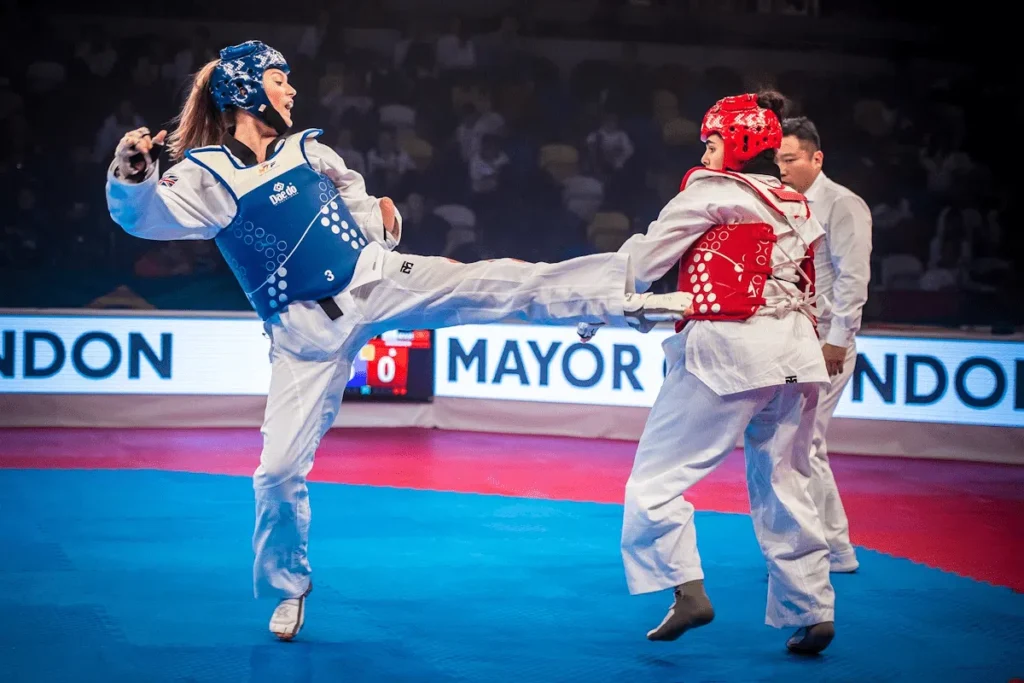
Considering taekwondo as a sport reveals several defining features. Modern tournaments operate under strict regulations covering allowable techniques, weight divisions, and standardized equipment. Expert judges evaluate matches based on accuracy, effectiveness, and complexity of the movements displayed.
Major international organizations—including those responsible for olympic sport programs—have standardized taekwondo’s format. Competitors develop advanced physical fighting skills through dedicated practice, with kicking techniques demanding exceptional agility and coordination.
Competitive framework and scoring
In today’s competitions, taekwondo practitioners face each other in carefully regulated bouts. Points are awarded for clean strikes delivered with legs or fists, following a detailed scoring rubric. Safety is paramount, with protective gear ensuring participants can perform at their best.
Athletes must demonstrate mastery of timing, distance, and decision-making strategy. Some may perceive the abundance of rules as distancing sport from self-defense, but others appreciate how this structure enhances performance and viewer engagement.
Olympic inclusion and international growth
The recognition of taekwondo as an olympic sport marked a milestone for the discipline. Olympic status increased global awareness and created new opportunities for aspiring athletes at every level.
Every four years, elite competitors from around the world gather to showcase taekwondo at its highest standard. This visibility inspires young people to train, join teams, and pursue goals beyond regular martial art classes.
Comparison to other combat sports and martial arts
Taekwondo belongs to a family of combat sports that blend athleticism with philosophical principles. What distinguishes taekwondo is its focus on dynamic leg movements and impressive flexibility. While some styles prioritize grappling or weaponry, this Korean origin discipline is renowned for explosive kicking techniques.
Nevertheless, similarities persist across traditional martial arts and combat sports. Many share origins in ancient self-defense, uphold ritual respect, and challenge practitioners physically and mentally.
Physical demands and technical requirements
Success in taekwondo relies on rigorous physical conditioning. Training emphasizes speed, balance, endurance, and control. Alongside athletic preparation, students master complex combinations of kicks and punches, learning to understand both their own capabilities and those of their opponents.
Comparisons with other striking styles highlight taekwondo’s signature spinning and jumping kicks. Unlike boxing, which focuses primarily on hand strikes, taekwondo places lower-body dexterity at the heart of its technique.
Cultural significance and philosophical values
Taekwondo preserves important cultural ideals inherited from its Korean origin. Principles like respect, perseverance, courtesy, and indomitable spirit guide daily training. Rituals, uniforms, and etiquette link generations of martial artists to present-day competitors.
Practicing this traditional martial art shapes character while equipping individuals for potential real-world challenges. Even among modern combat sports, the balance between effective self-defense and personal growth remains central to taekwondo culture.
Benefits of practicing taekwondo
Regardless of whether one views it strictly as a sport or as a wider discipline, engaging in taekwondo brings substantial benefits. Practitioners often experience increased confidence, stamina, flexibility, and discipline—qualities that extend well beyond the dojang.
These advantages are not exclusive to medal-seeking athletes. Families, children, and adults alike gain value from building self-defense skills, enhancing fitness, and joining a supportive community. Dedication leads to meaningful progress that positively affects many aspects of life.
- Enhanced self-discipline and concentration
- Improved reaction times and agility
- Increased cardiovascular health
- Effective self-defense knowledge
- Social connection with trainers and peers
- Respect for traditions and cultural appreciation
Training in any traditional martial art also builds emotional resilience. Challenges faced during sparring, testing, and regular lessons foster perseverance and adaptability under pressure.
As a complement to studies or professional responsibilities, sport-based taekwondo encourages lifelong physical activity. Thanks to its welcoming environment and clear progression path, even newcomers without prior experience soon achieve rewarding results.
Questions about taekwondo’s role and status
Is taekwondo more of a sport or a martial art?
Taekwondo exhibits qualities of both a traditional martial art and a contemporary sport. In everyday training, students learn self-defense, discipline, and cultural values. During competitions, structured rules, judging, and athletic preparation closely align taekwondo with other recognized combat sports.
- Martial art aspects: Historical techniques, philosophy, cultural rituals
- Sport aspects: Structured events, scoring, specialized equipment
Why is taekwondo considered an olympic sport?
Taekwondo earned olympic sport status thanks to its formalized rules suitable for worldwide competition, broad popularity, and objective judging standards. The discipline demonstrates athletic excellence, fairness, and inclusivity on a global platform, aligning well with the Olympic movement’s ideals.
- Clear and enforceable rules
- Global federation oversight
- Universal appeal for all ages
Does learning taekwondo improve self-defense skills?
Absolutely, practicing taekwondo strengthens self-defense abilities by developing quick reflexes, situational awareness, and efficient movement. Core drills incorporate both kicking techniques and punching techniques that are valuable for neutralizing threats efficiently.
- Practical application of blocks and counters
- Confidence under pressure
- Comprehensive understanding of body mechanics
| Technique | Application |
|---|---|
| Low block | Defending against leg grabs |
| Roundhouse kick | Stopping advancing opponents |
Are there differences between taekwondo and other combat sports?
Taekwondo specializes in high, fast kicks, setting it apart from most combat sports where hand techniques or grappling are more prominent. It also integrates sporting regulations while maintaining essential elements from its background as a traditional martial art.
- Signature spinning and jumping kicks
- Less grappling than wrestling or judo
- Greater emphasis on form and etiquette