
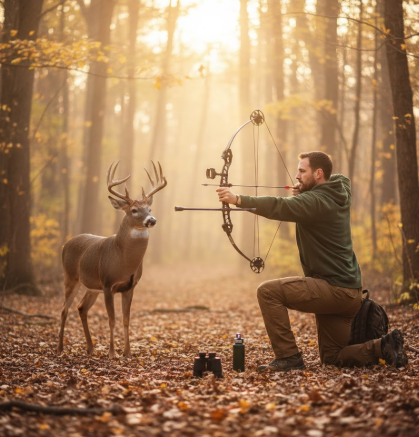
The question of whether hunting qualifies as a sport sparks lively discussion, especially when considering history, changing values, and what constitutes competitive entertainment. Some individuals view hunting primarily through the lens of survival and subsistence, while others frame it as recreation or even as a contest between hunter and hunted. To truly understand this debate, several factors must be considered—from definitions and traditions to ethics and conservation. Each aspect deserves careful exploration for a more complete perspective.
What defines a sport?
A good starting point is the general sport definition. According to most dictionaries and athletic organizations, a sport involves some form of physical exertion or strenuous activity, skill, competition, and often codified rules. Most traditional sports are designed as forms of competitive entertainment, where participants test their abilities against others or themselves. This framework helps determine if seeking, pursuing, and killing animals aligns with common perceptions of sport.
Sports can be solo or team-based, but they nearly always include measurable objectives, such as scoring points or completing specific tasks. Proper equipment and recognized skills are often seen as essential elements. The key question becomes how closely hunting fits these criteria, and which aspects align with or differ from typical sporting activities.
Does hunting fit the sport model?
The debate over hunting’s status as a sport typically circles back to classic hallmarks: strenuous activity, the use of skills and equipment, and elements of competition.
Hunting certainly demands significant fitness, patience, and acquired knowledge. Tracking game on foot, enduring difficult conditions, and making precise shots all fall within the realm of skill-based challenges. Many hunters train extensively in marksmanship, tracking, and wildlife biology—rivaling athletes in other domains regarding preparation and discipline.
Competitive entertainment versus necessity
When examining organized hunting competitions, such as shooting tournaments or regulated game hunts, the parallels with other sports become clear. Participants may compete directly against one another or strive to meet certain standards set by clubs and organizations. Prizes, rankings, and social prestige make these events resemble classic competitive entertainment.
However, in communities that rely on subsistence/life skill hunting, or view it mainly as a necessity, the connection to sport becomes less distinct. Here, seeking, pursuing, and killing animals relate more to daily survival than to recreation or spectacle. Motivations differ greatly compared to mainstream sports, where participation is voluntary and aimed at leisure or personal challenge.
Skills and equipment in modern hunting
Another argument for viewing hunting as a sport lies in its reliance on specialized gear and developed competencies. Modern hunting involves equipment ranging from bows and firearms to camouflage clothing and navigation tools. Using this equipment effectively requires training, much like in classic sports such as archery or target shooting.
Techniques such as reading landscapes, predicting animal behavior, and taking ethical shots are major focus areas for dedicated hunters. Mastery of these nuances often earns peer respect, just as expertise does in any competitive field. In settings with regulations imposing bag limits and fair chase principles, the experience transforms into a structured contest between hunter and hunted.
Ethical questions: animal welfare and conservation
No discussion about hunting’s status as a sport would be complete without addressing the ethical dimensions. Concerns about animal welfare/cruelty have increased alongside evolving views regarding human responsibility toward other species. This factor sets hunting apart from sports that lack potentially lethal consequences for non-human participants.
Wildlife management also plays a central role. Regulated hunting regimes grounded in conservation science aim to balance ecosystem health with human needs and interests. For some, participating in regulated hunting is seen as a responsible way to maintain harmony between humans and nature—distinct from viewing it solely as recreation.
Contest between hunter and hunted
Certain advocates argue that hunting is unique because it genuinely represents a contest between hunter and hunted. Wild animals use natural instincts and heightened senses to avoid capture, resulting in unpredictable outcomes. Even highly skilled hunters face uncertainty, as environmental factors often influence success.
This dynamic distinguishes hunting from many conventional sports, where both parties knowingly engage in the contest. Still, some critics claim fairness is compromised by technological advantages held by humans, so the contest might not always feel balanced. Those who follow strict “fair chase” ethics seek to reduce this gap, promoting mutual respect and an authentic sporting challenge.
Public perception and cultural contexts
Attitudes toward hunting—and whether it should be seen as a legitimate sport—often reflect broader societal norms. In regions where hunting remains integral to tradition or identity, considering it a sport seems natural. Elsewhere, increasing urbanization and media portrayals have led to skepticism or outright opposition.
For some, hunting appears as a fading relic or a controversial pastime incompatible with modern priorities, especially those related to animal rights. Hunters focused on recreation sometimes present their practices as expressions of outdoor stewardship and connection to nature, hoping to address concerns about animal cruelty among non-hunters.
Notable features and motivations for hunting
The diversity among hunters means there is no single answer to why people hunt or how they perceive their own pursuits. Some embrace the challenge and camaraderie offered by group hunts or competitions, while others find satisfaction in independent experiences, self-reliance, or food gathering. A variety of lawful practices and codes further blur straightforward classification.
Several reasons motivate individuals to participate in hunting:
- Recreation and enjoyment of the outdoors
- Food acquisition and development of subsistence/life skills
- Cultural connections and family traditions
- Wildlife management and contribution to ecosystems
- Personal challenge and pursuit of mastery
Differentiating between these motivations helps clarify why debates continue—especially as definitions evolve alongside culture and legal frameworks.
Common questions about hunting and its role in society
How does hunting compare to other sports in terms of required skills and equipment?
Many sports require training and specialized tools, and hunting is no exception. Key skill sets like tracking, marksmanship, and analyzing animal behavior closely resemble those needed in disciplines such as archery or biathlon. The range of equipment—from optics and clothing to weapons—mirrors the technical requirements found in competitive fields such as shooting sports or fishing.
- Marksmanship (rifle/archery)
- Animal tracking
- Navigation and survival strategy
Preparation and ongoing learning remain essential components for proficiency, just as in more widely recognized sports.
Can hunting be considered both recreation and a subsistence skill?
Yes, hunting occupies a space at the intersection of recreation and survival. Some pursue hunting primarily as a source of food and an important life skill, particularly in rural or indigenous contexts. Others treat it as an enjoyable pastime, often deeply intertwined with tradition or a connection to the outdoors.
- Recreation: Enjoyment, social bonding, outdoor adventure
- Subsistence: Food security, self-reliance, heritage preservation
This dual identity shapes public attitudes and discussions surrounding hunting in society.
Are there established rules and ethics that guide hunting practices?
Absolutely. Legal regulations, fair chase principles, and community guidelines exist to ensure that hunting is conducted ethically and sustainably. These frameworks address issues such as animal welfare/cruelty, permissible equipment, bag limits, and designated seasons.
- Bag limits to prevent overharvesting
- Prohibited methods to promote fairness and humane outcomes
- Licensing and education programs
Such structures reinforce safety, resource protection, and responsible conduct for both hunters and ecosystems.
What role does hunting play in wildlife management?
When conducted under scientific guidance, regulated hunting supports healthy animal populations and maintains habitat balance. Management agencies often use licensed hunting to prevent overpopulation, mitigate ecological damage, and fund conservation initiatives.
| Role | Description |
|---|---|
| Population control | Reduces risks of disease and starvation in wildlife |
| Funding | Provides resources via license fees for conservation projects |
| Ecosystem balance | Helps maintain plant and animal diversity |
Collaboration between hunters, scientists, and policymakers proves crucial for sustainable results