
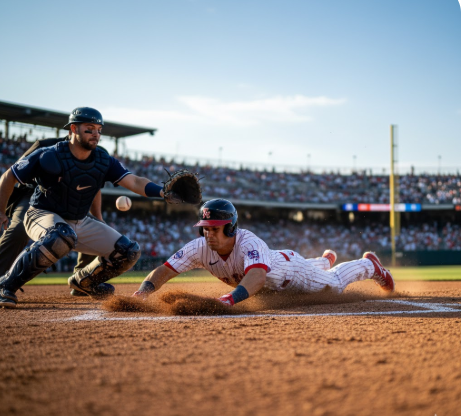
At first glance, baseball appears perfectly suited for the world’s biggest sporting stage. However, its journey with the Olympics has been anything but straightforward. Over the decades, fans have witnessed a roller coaster of appearances, exclusions, and ongoing debates about baseball’s place among Olympic medal sports. Questions surrounding official Olympic sport status, demonstration events, and the relationship with other bat-and-ball sports often resurface—especially as each host country brings unique perspectives to the table.
The early years: Baseball as a demonstration sport
The story of baseball in the Olympics began long before it became an official event. Early records show that the sport first appeared at the 1904 Games as part of exhibition matches, well before medals were awarded. For much of the 20th century, baseball held the label of demonstration sport, allowing teams to play on the sidelines without any hope of official recognition or podium finishes.
This demonstration status persisted into the late 1900s. These unofficial appearances gave fans a taste of Olympic action and allowed athletes to perform on such a prestigious stage—even if they left without medals or international headlines. Still, the question always remained: would baseball ever achieve full inclusion in the Olympic program?
Baseball gains official Olympic sport status
The landscape shifted dramatically in 1992 when Barcelona hosted the Summer Olympics. For the very first time, baseball was elevated to a full-fledged medal event. This milestone granted official Olympic sport status and sparked enthusiasm among both players and international federations.
This recognition enabled eight national teams to compete for gold, silver, and bronze. Between 1992 and 2008, spectators enjoyed thrilling matchups and unforgettable moments—a proud era in the history of baseball in the Olympics. Suddenly, aspiring players worldwide dreamed of becoming Olympic champions, adding a new layer of motivation beyond professional league titles.
Despite this progress, the initial inclusion came with restrictions. Baseball debuted as a men’s-only sport at the Olympics, igniting discussions around gender equity and representation on the global stage. During these years, softball emerged as the women’s counterpart, making its own Olympic debut in Atlanta 1996—though it too faced uncertainty regarding continued inclusion.
Supporters and critics questioned whether baseball and softball should always be paired together in Olympic scheduling or considered separately based on their popularity and development across continents. These debates played a significant role in shaping future decisions about which disciplines would appear in upcoming editions.
The close relationship between baseball and softball significantly influenced decisions about Olympic program changes. When one sport lost official status, the other frequently faced the same fate. Their fates were often intertwined and discussed collectively by International Olympic Committee (IOC) panels tasked with selecting sports for each edition of the Games.
Typically, the IOC approached them as a package deal—either both returned, or neither made the cut. This joint evaluation affected not only athletes but also fans eager to see top teams compete under the Olympic spotlight.
On-again off-again status: The push and pull of the Olympic program
A defining feature of baseball’s Olympic narrative is its on-again off-again status. After 2008, many wondered why such a globally recognized sport was excluded from subsequent Games. The underlying reasons included conflicts with major league schedules, questions about global participation levels, and challenges for hosts unaccustomed to organizing elite-level baseball tournaments.
This cycle repeated itself: following its removal after Beijing 2008, baseball made a brief return as a medal sport in Tokyo 2020. That comeback was largely due to Japan’s deep-rooted baseball tradition, highlighting how local enthusiasm can strongly influence the final lineup of Olympic events.
Host country preferences can significantly impact which sports are featured. For example, Japan’s passion for baseball helped secure its reinstatement for Tokyo 2020. Countries lacking infrastructure or widespread interest are less inclined to advocate for baseball’s inclusion, resulting in periods where the sport vanishes from the Olympic roster.
The interplay between Olympic program changes and host nation culture demonstrates how evolving priorities shape the Games. As each location brings its traditions, some sports gain momentum while others slip away—making permanent inclusion a constant challenge for baseball enthusiasts and governing bodies alike.
During years when baseball served as a medal event, competition intensity soared, drawing high-profile athletes and captivating audiences. Winning Olympic gold during those times carried immense prestige, rivaling even world championships for significance.
Conversely, stretches without Olympic participation led federations to focus on alternative tournaments. As a result, some athletes missed out on their Olympic dreams, underscoring just how rare—and coveted—a spot in the Games truly is for future stars.
What does the future hold for baseball’s role in the Olympics?
With every Olympic cycle, speculation intensifies about potential program updates. Discussions about inclusion or exclusion from the Olympics rarely disappear, considering baseball’s large fanbase and rich legacy. Some advocate for permanent reinstatement, while others suggest newer sports should take center stage to broaden the Games’ appeal.
Current trends indicate that factors like global reach, ease of organization, and the balance between traditional and innovative events will help determine baseball’s future. Selection processes for upcoming Games suggest that baseball remains a strong candidate for re-entry whenever circumstances align—be it enthusiastic hosts or shifting attitudes within the IOC.
- Early Olympic appearances as a demonstration sport only
- Full medal event status from 1992 onward, with interruptions due to exclusion
- Close links and shared fate with softball in the Olympic program
- Strong connection between host country preference and temporary reinstatement
- Ongoing debates around official Olympic sport status and program changes
Frequently asked questions about baseball and the Olympics
Why does baseball have an on-again off-again status at the Olympics?
This pattern stems from various factors, including scheduling conflicts with professional leagues, differences in global popularity, and difficulties securing host country support. Each Olympic cycle, committees evaluate which sports best represent diverse regions and current trends.
- Complex logistics compared to more universal sports
- Dependence on dedicated facilities and experienced staff
- Occasional lack of agreement among stakeholders
Is baseball considered a men’s-only sport in the Olympics?
Historically, baseball has been a men’s-only sport in Olympic competition, while softball has provided the parallel for women. Both have faced similar journeys regarding inclusion and exclusion from the Olympics. Gender equity continues to inspire discussion, especially as calls increase for mixed-gender opportunities in more disciplines.
- Baseball – traditionally male teams
- Softball – female participation at the Olympic level
How do host countries affect baseball’s presence at the Olympics?
When the host nation boasts a strong baseball tradition, the likelihood of reintroducing the game as a medal event rises. Local infrastructure, audience demand, and influential sport governance sway programming decisions. Host countries may propose popular homegrown sports, making a compelling case for their addition to that year’s Olympics.
- Countries with established leagues wield greater influence
- Less-developed markets face challenges justifying inclusion
| Olympic Year | Host Country | Baseball Status |
|---|---|---|
| 1992 | Spain | Official medal sport debut |
| 2020 | Japan | Reinstated as medal sport |
Is there hope for baseball returning to the Olympic program permanently?
The prospect of permanent reinstatement depends on ongoing discussions among the IOC, national federations, and public interest. Strong performances during reinstated events and a growing global following may persuade leadership to make space for baseball long-term, though logistics and the rise of emerging sports continue to play a critical role.
- Balancing modern and traditional sports
- Demonstrating proven popularity in multiple countries