
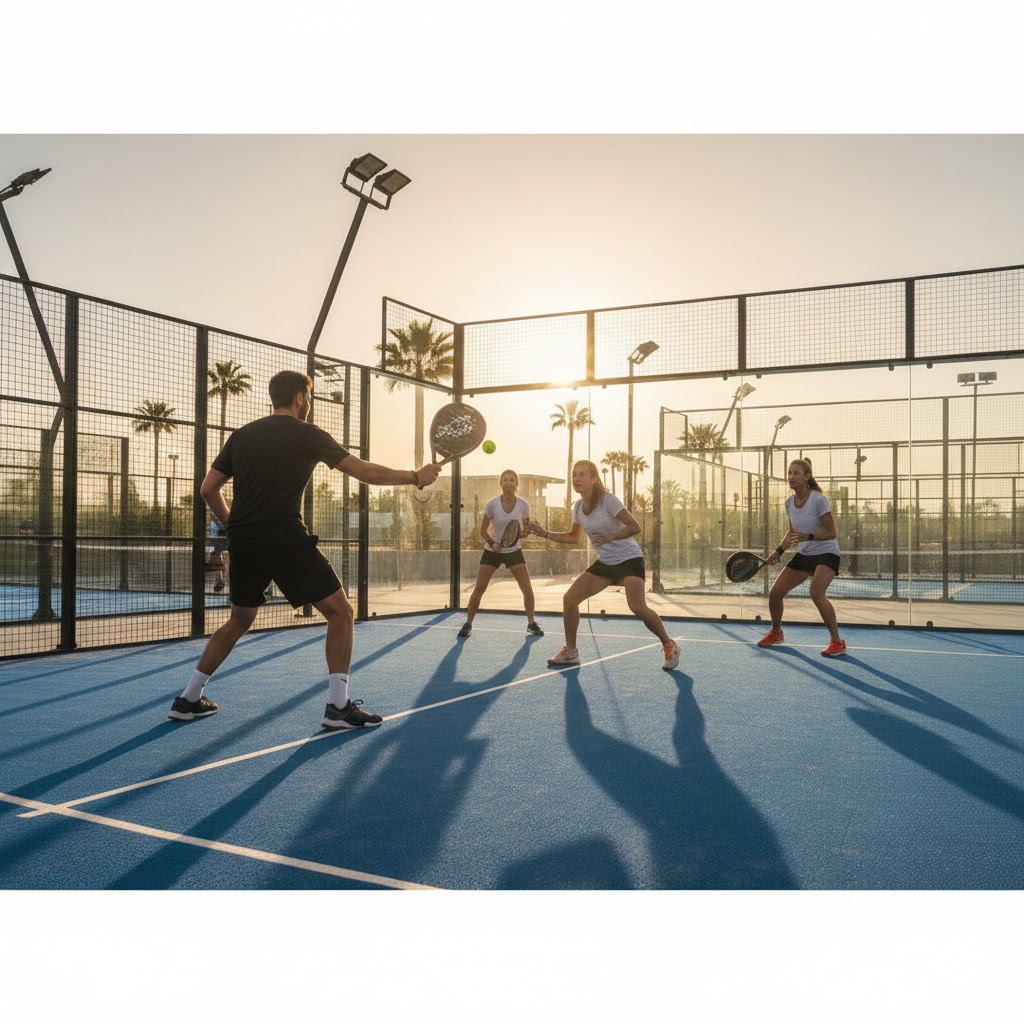
The padel sport has been drawing attention worldwide, captivating those interested in discovering a new racket sport that skillfully blends action with social enjoyment. Its easy-to-learn rules and lively rallies make it stand out as a unique combination of tennis and squash, while still offering its own distinct twist. For individuals curious about why padel has experienced such rapid growth and popularity, a closer look reveals the features that set it apart from other activities.
Origins and evolution of padel sport
The journey of padel began in Mexico in 1969, much earlier than many might assume. From its Mexican roots, the sport quickly gained momentum across Spanish-speaking countries before capturing interest throughout Europe and beyond. Today, padel is played on every continent, with its community expanding year after year.
Padel did not simply develop as a minor variant of existing games. Instead, it draws from several different racket sports, merging their best aspects into a fresh experience. This blend has kept the sport vibrant and appealing, attracting players from a wide range of backgrounds.
What makes padel unique?
The real charm of padel lies in its clever fusion—it truly serves as a mix of tennis, squash, and other racket sports. Matches are always played in doubles, which promotes teamwork and ensures an engaging, sociable environment both during and between points. Dynamic movement, quick exchanges, and thoughtful strategy come together to create a welcoming and energetic atmosphere.
This approach fosters a social and fun ambiance, making the sport as much about connection as competition. Padel invites conversation, shared celebrations, and plenty of laughter, especially when chasing down creative shots rebounding off the glass wall.
Enclosed courts and distinctive surfaces
Unlike traditional tennis, where lost balls are out of play, padel introduces a new layer of excitement with its enclosed court. Surrounded by glass and metal fencing, these walls become part of the game—strategically used in rallies much like in squash. Players can use the boundaries for inventive plays, giving matches a creative edge.
The size of the court also distinguishes padel; measuring just 20 meters by 10 meters, it is notably smaller than a tennis court. This condensed space leads to faster-paced action and keeps every player involved, even during friendly matches.
Equipment and essential gear
One of the most noticeable differences between padel and other racket sports is the equipment. A padel paddle is solid and perforated, unlike the strung racquets used in tennis. This design makes the sport easier for beginners to pick up, lowering barriers and reducing injury risks.
The balls resemble those used in tennis but have slightly less pressure, which changes how they bounce on the artificial turf common in padel facilities. The straightforward gear means the learning curve is gentle, increasing accessibility and contributing to the sport’s fast-growing popularity.
How to play padel sport?
Mastering the basics of padel is refreshingly simple—a major reason the sport is often described as easy to learn. Every match is played in doubles, encouraging collaboration from the start. The serve must be underhand and land diagonally in the opponent’s service box. Once the rally begins, players can hit directly over the net or use the walls, opening up countless angles for attack and defense.
Sides are switched after odd-numbered games, following familiar traditions from tennis. Scoring is also similar, so anyone with past racket sport experience will find it easy to adapt.
- Serve must always be underhand, with the ball landing inside the opponent’s service box.
- Balls bouncing off walls/glass walls remain in play if rules are followed.
- Matches are strictly doubles, involving four players per game.
- Smaller than a tennis court, leading to increased pace and engagement.
- Scoring follows tennis conventions for clarity.
Tactics and styles of play
Despite its relaxed vibe, padel offers rich tactical depth. Quick reflexes and smart footwork combine with strategic shot placement. Skilled pairs communicate constantly, setting traps with soft drop shots and powerful volleys—opportunities made possible by the sport’s signature glass wall segments.
While strong hitters may win brief exchanges, success in longer rallies depends on patience and positioning. Shifting smoothly between defensive lobs and aggressive smashes highlights how padel rewards versatility and thoughtful play rather than pure power.
Why is padel considered so social and accessible?
Many discover padel’s appeal in its open, approachable nature. There is no need for advanced technique to enjoy the game; even first-timers can join rallies and share laughs almost immediately. The forgiving rebound off the glass enclosure lets newcomers stay in the game without constant interruptions or lost balls.
Padel’s culture thrives on inclusivity, with frequent mixing of skill levels. This helps reinforce its reputation as one of the most social and fun racket sports available, welcoming participants of all ages and abilities into a supportive community.
Global popularity and future prospects
Padel is now recognized as one of the world’s fastest-growing sports, inspiring enthusiasm across continents. Major cities host dedicated clubs, indoor complexes, and international competitions. The sport’s reach continues to expand, reflecting its cross-generational and multicultural appeal.
With greater media exposure and easier access to equipment, interest in padel shows no signs of declining. Its inclusive spirit and innovative mix of tennis, squash, and other racket sports ensure excitement and continued growth for years ahead.
Answers to popular questions about padel sport
How is padel different from tennis and squash?
Padel combines key elements of both tennis and squash yet maintains its own identity. The court is smaller than a tennis court, fully enclosed, and uses glass walls as part of active play, reminiscent of squash. Only four players compete at once (played in doubles), regardless of level. Equipment differs too, with padel utilizing solid paddles instead of strung racquets.
- Court walls shape gameplay
- Paddle design eases learning
- Doubles format required
| Feature | Padel | Tennis | Squash |
|---|---|---|---|
| Played in doubles | Always | Optional | Optional |
| Uses walls | Yes | No | Yes |
| Racket type | Solid paddle | Strung racquet | Strung racquet |
Can newcomers enjoy padel without prior experience?
Certainly! Many find padel easy to learn thanks to its simple scoring and supportive social setting. Beginners quickly experience the excitement of extended rallies and cooperative play. The compact court and helpful rebounds off glass walls keep everyone engaged right from the beginning.
- Quick introductions offered at most venues
- Group sessions for beginners are common
- The social atmosphere welcomes all skill levels
What are the health or fitness benefits of playing padel?
Padel delivers a full-body workout, building aerobic endurance, agility, and coordination. Fast rallies require constant repositioning, helping players burn calories while sharpening reflexes and improving muscle tone. Playing exclusively in doubles supports joint safety and balance, keeping injuries relatively rare.
- Boosts reaction speed through dynamic play
- Strengthens upper and lower body muscles
- Alternates intense activity with short recoveries for heart health
Is special equipment required for padel or can tennis gear be used?
Dedicated padel gear enhances comfort and performance. Most importantly, the padel paddle is solid and shorter than a standard tennis racquet. Balls are similar to tennis balls but have less pressure, ensuring the right bounce within an enclosed court.
- Padel-specific paddles are recommended
- Standard athletic apparel and court shoes are suitable
- Most clubs rent or provide starter gear for newcomers
| Item | Padel | Tennis |
|---|---|---|
| Racket/Paddle | Solid, perforated | Long, strung |
| Ball | Low-pressure | High-pressure |